
 By asahifile
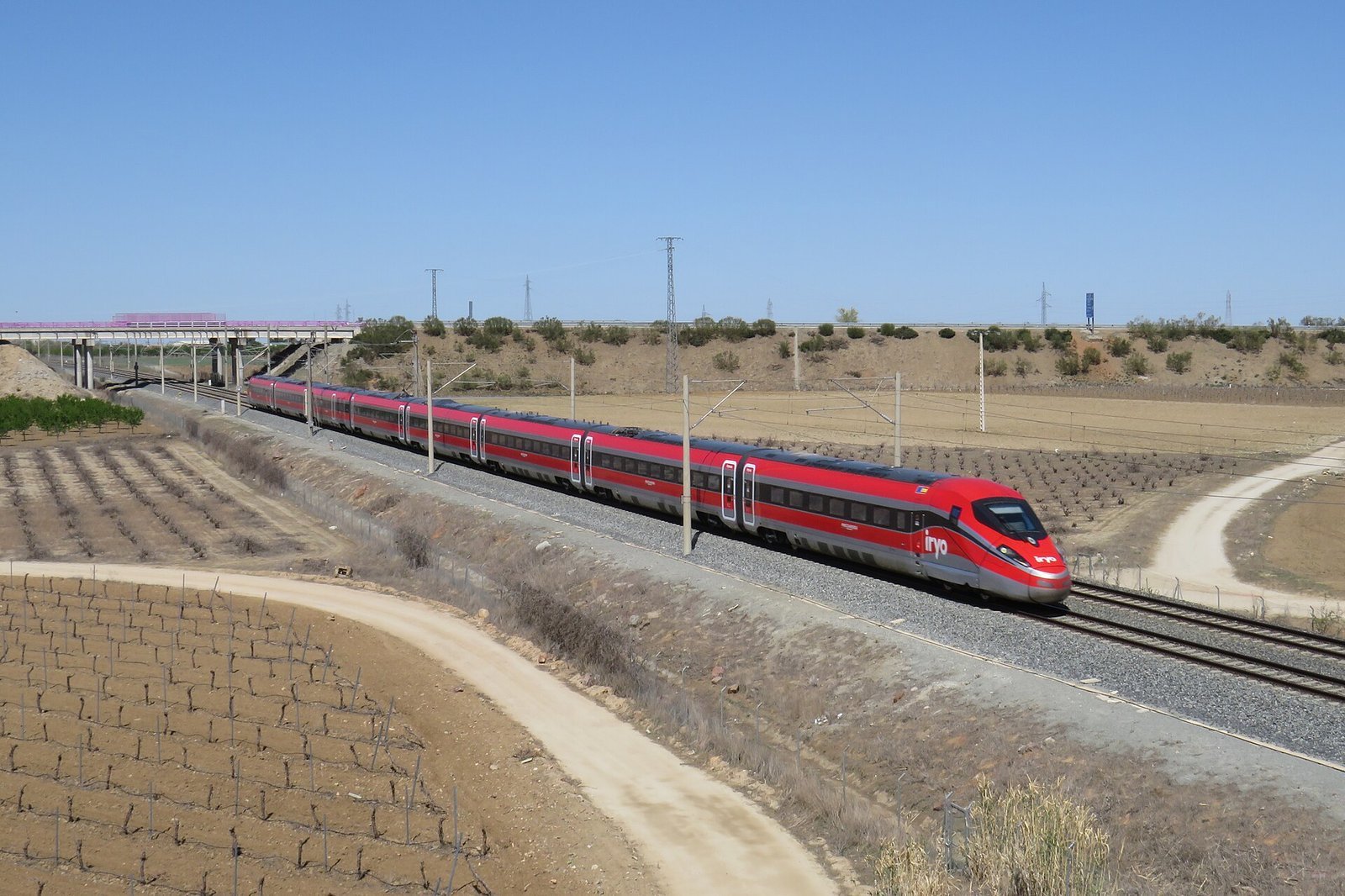
Spain’s transport minister used the word “inexplicable” three times on Wednesday, and the timeline explains why. At 08:30 local time, the LZB automatic train protection system on a 63-kilometre stretch of the Madrid-Seville high-speed line failed near Urda, in Toledo province, and every train on that section was brought to a stand with red signals showing. Six minutes later, at 08:36, the Adif control centre in Madrid authorised a Renfe AVE train, service 02080, to resume its journey “as normal” — with no speed restriction. At 08:53 it ran into the back of an Iryo train, service 6076, that was still standing on the track ahead. The regional government of Castilla-La Mancha confirmed at least 68 dead: 24 in the Renfe consist, 44 in the Iryo consist.
Two rear Iryo carriages went down an embankment, one carriage caught fire, and photographs from the site show a length of rail driven clean through a carriage body. The Renfe train was carrying 397 people; the Iryo train 147, including a baby. Prime Minister Pedro Sánchez declared three days of mourning. It is Spain’s deadliest rail accident in 13 years, and the second fatal high-speed collision on this corridor in ten months.
The rule that existed and was not applied
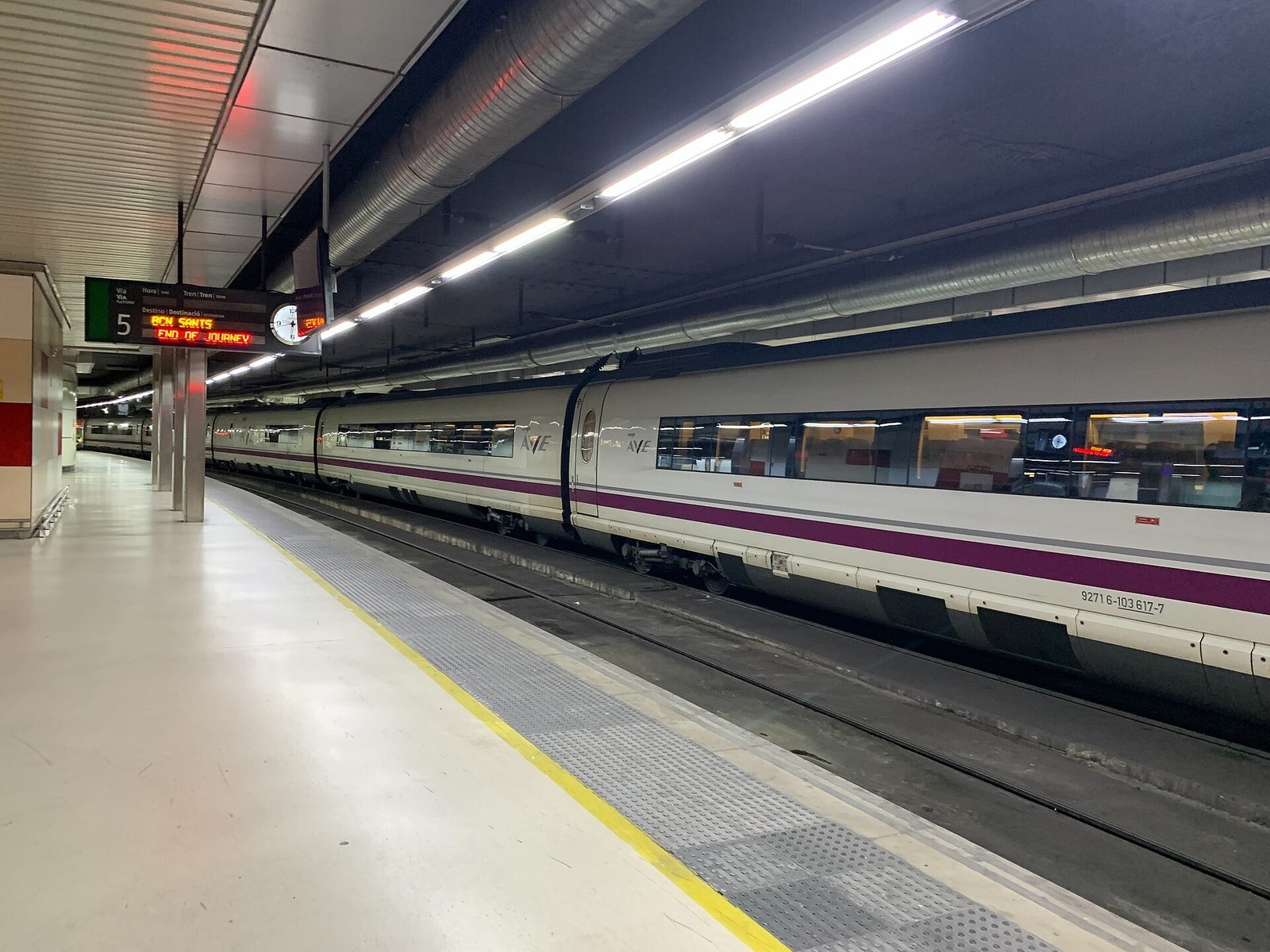
What separates this accident from an unavoidable technical failure is that Spanish procedure already covers it. When the automatic signalling layer drops out and control passes to a human in a control centre, trains are supposed to proceed under “cautious movement” — driving by sight — at a limit of roughly 40 km/h, according to reporting by Catalan News citing the transport ministry’s own account. The Madrid-Seville line was designed for speeds of up to 300 km/h, per the infrastructure manager Adif. The Renfe train was cleared without that restriction, and Puente said the decision broke protocol.
The physics of that difference is the part worth sitting with. Kinetic energy scales with the square of speed, so the energy a trainset carries at 300 km/h is about 56 times what the same train carries at 40 km/h. That ratio does not predict the death toll — braking, crumple zones, and where people were sitting all matter — but it does explain why “resume as normal” and “resume by sight” are not variants of the same instruction. They are different categories of event.
The number the death toll hides
Split by train, the casualty figures are not evenly distributed, and the asymmetry is the most uncomfortable finding in Wednesday’s data. Twenty-four deaths among 397 people on the moving Renfe train works out to about 6.1 per cent. Forty-four deaths among 147 people on the stationary Iryo train is about 29.9 per cent — roughly five times the fatality rate of the train that did the hitting. Across both trains, 68 dead out of 544 on board is about 12.5 per cent.
The struck train was hit from behind with no warning and no opportunity for its crew to act, and its rear carriages were where the impact concentrated. That pattern is common in rear-end rail collisions and is precisely what the 40 km/h sight-running rule is designed to prevent: a train moving at caution can stop inside the distance it can see to be clear.
Where the official record still disagrees
Assembling Wednesday’s coverage into a single timeline requires deciding which of several conflicting numbers to use, and the honest answer is that some of them are still moving. The points of disagreement, source by source:
- Time of impact. Puente and the regional government put the collision at 08:53, and that is the figure the wire services carried. Adif’s first public statement placed the collision at “approximately 8:30am,” which is actually the moment the signalling system failed. BBC reported the crash as happening “just after 09:00,” and CNBC as “shortly before 9:15 a.m.” — a 45-minute spread on the same event.
- Death toll. Spain in English published “at least 10” in its first version; DW quoted a regional spokesperson at 64; the regional government’s confirmed figure is 68. The 68 is internally consistent — 24 plus 44 — which is why it has held.
- Injuries. Reports on Wednesday ranged from “over 50” (DW) and 58 (AP, CBS, Catalan News) to 68 (NBC), 77 (CNN en Español) and “about 100” (CNN), depending on whether the count included people treated at the scene.
- Distance and place. The site is 140 km south of Madrid for the BBC, 150 km for CNN and USA Today, and kilometre 118 of the line for RENFE’s own service data. The location is given as between Mora and Orgaz in some accounts and between Urda and Los Yébenes in others — adjacent municipalities along the same stretch.
- Passenger counts. 397 and 147 is the regional government figure; CNN reported 393 on the Renfe train and 151 on the Iryo; DW reported 146 on the Iryo. None of these changes the fatality-rate arithmetic by more than a fraction of a point.
Two crashes, ten months, and the same corridor
In January, 45 people died at Adamuz in Córdoba province when an Iryo train derailed and its rear carriages came to rest in the path of an approaching Alvia service. Add Wednesday’s 68 and Spain has lost 113 people in two high-speed collisions inside ten months — more than the 80 killed in the 2013 Santiago de Compostela derailment that had stood as the country’s benchmark disaster for 13 years. Both 2026 accidents involve a train that came to a stop and a second train that did not, which is the scenario that automatic protection exists to make impossible.
The uncomfortable structural point is that the failover path — from a failed lineside computer to a human in a Madrid control room — is where both the protection and the risk now sit. The system performed its first job: it stopped the trains. It was the human layer above it that cleared one of them back into motion, and that layer was handling a 63-kilometre section with multiple stopped trains at once.
What to watch
- Whether Adif publishes the control-centre voice log and the exact wording of the 08:36 clearance, which will show whether the operator knew a train was standing ahead.
- Whether Spain’s rail safety agency (AESF) opens a formal investigation into LZB failure procedures rather than leaving the inquiry to the ministry that runs the infrastructure.
- Timeline for restoring the Madrid-Andalusia line, with Madrid-Toledo and Málaga-Seville sections reported as still running.
- Whether the 40 km/h sight-running rule becomes enforceable in the signalling software — a hard speed ceiling that a controller cannot override — instead of a written instruction.
- Iryo’s and Renfe’s passenger manifests, which will settle the disputed 147-versus-151 and 397-versus-393 counts.
Sources: BBC News, BBC (passenger accounts), Catalan News, CBS News/AP, CNBC, Spain in English, Adif Alta Velocidad.