
 By asahifile
Aleksandar Vučić conceded defeat about ninety minutes after polls closed on Sunday night, and the Student List — a movement that began with campus protests two years ago and turned itself into a candidate list — won Serbia’s parliamentary election. That much is not in dispute. Almost everything quantitative about the result arrived in versions that do not agree with each other: the seat totals, the number of parties in the new parliament, and the turnout implied by the published percentages.
This is not one outlet getting it wrong. Reuters, the Associated Press (via CNN), Euronews and RTé all carried the same concession quote and the same two vote totals, and the internal arithmetic of that package does not close. Here is what the wires settled, what they left open, and which figures a reader can safely quote this morning.
What every version agrees on
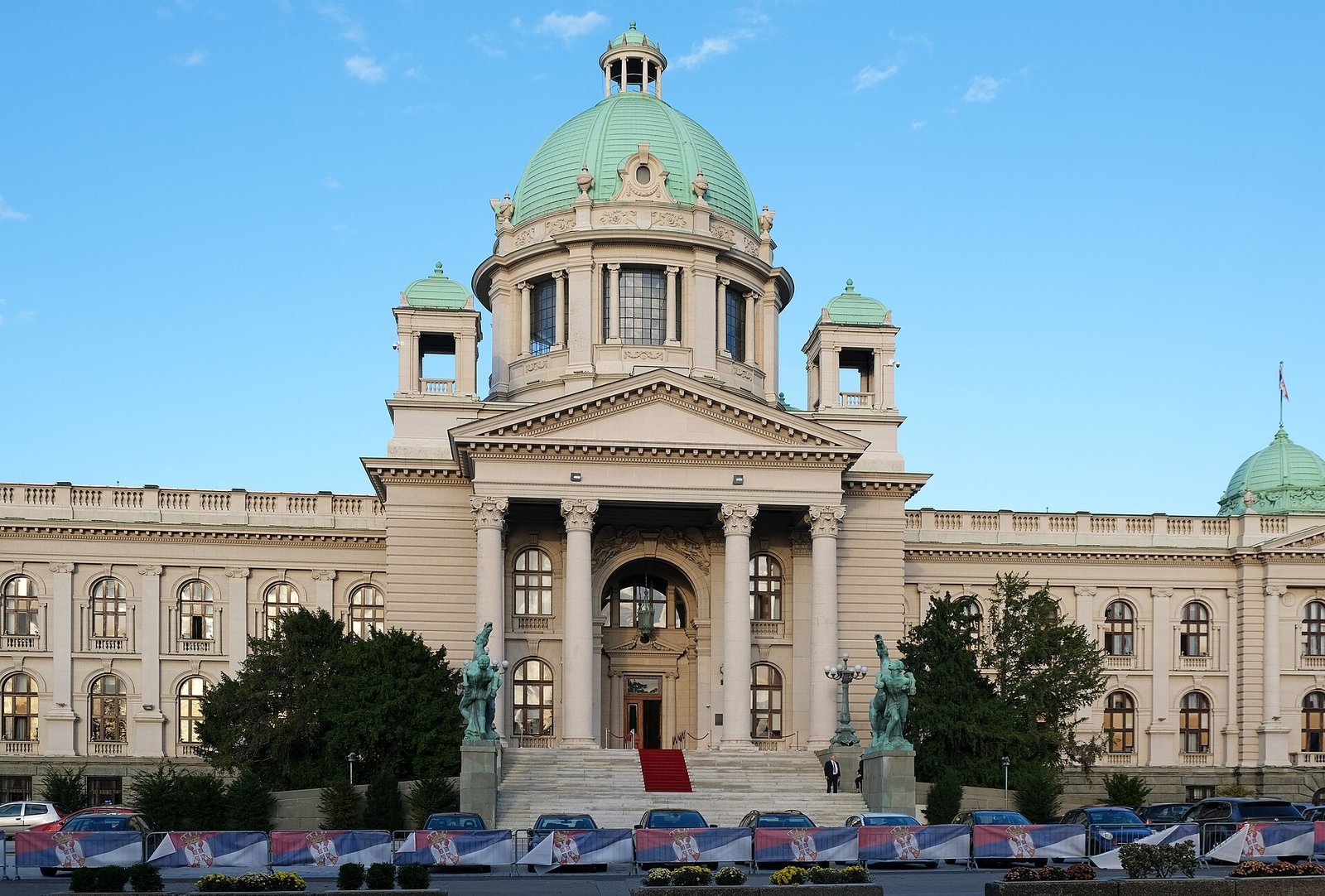
- 250 seats, a roll of 6.4 million registered voters, and a 3 percent threshold.
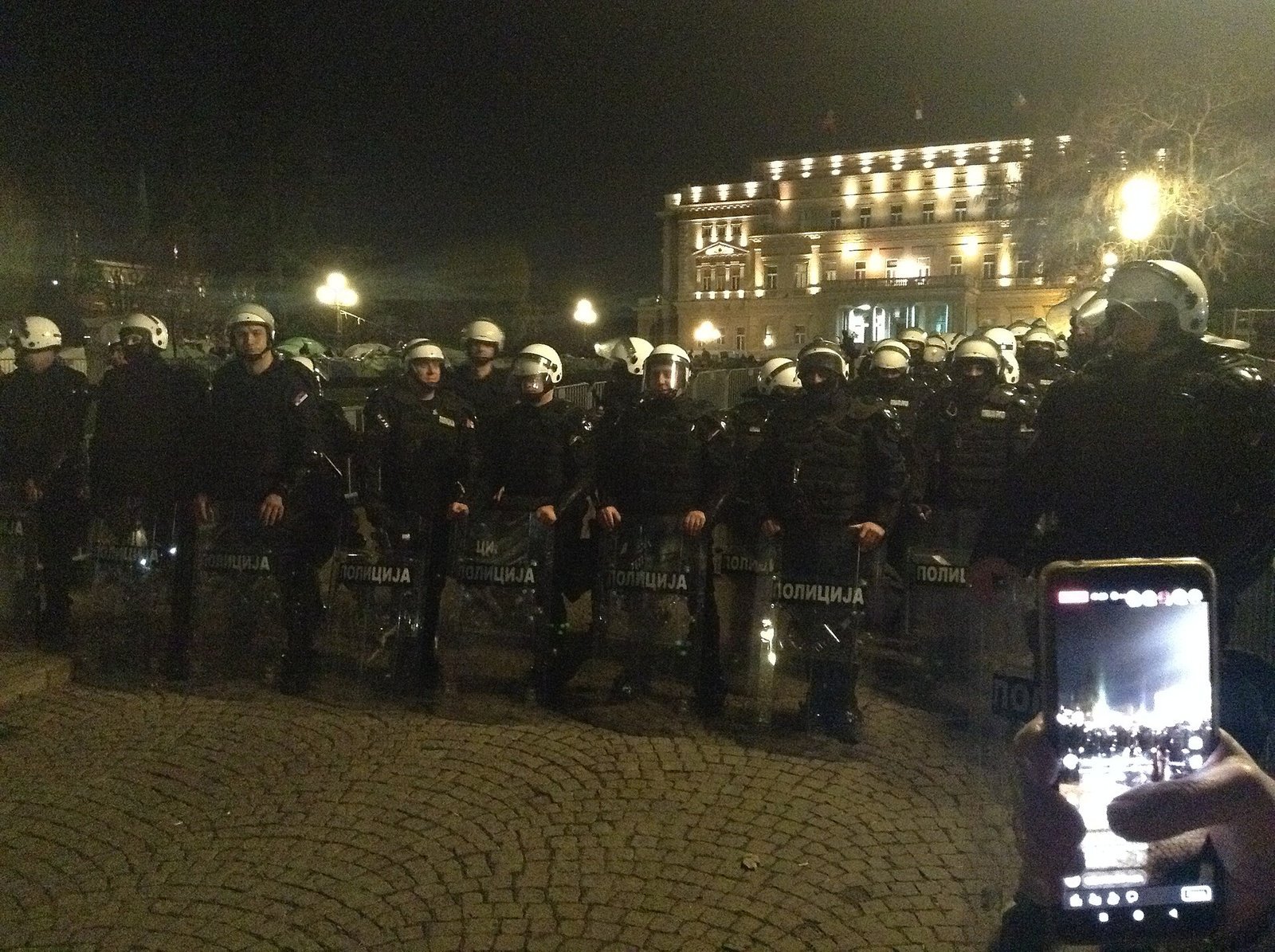
- A snap election called by Vučić in September, after almost two years of student-led demonstrations.
- The trigger: 16 people killed in 2024 when a concrete canopy collapsed at a train station in Novi Sad.
- Vučić resigned the presidency last month to run for prime minister, per the Associated Press; Euronews calls him the “outgoing president”.
- The Student List is led by cardiologist Ilija Srdanović and otherwise staffed with largely unknown candidates — professors, actors, farmers — and has not said who would be prime minister, RTé notes.
Contradiction 1: “no one else has entered parliament”
Vučić’s concession, as Euronews transcribes it, carries its own contradiction in two consecutive sentences: “No one else has entered parliament. The Alliance of Vojvodina Hungarians (SVM) has won three seats, the Albanians one, and I think the SDA has also secured a seat.” Five minority seats is not nobody, and both sentences cannot be literally true.
The pollster sample Reuters quotes is more precise — 138 seats for the Student List, 104 for Vučić’s SNS, from CESID-IPSPS — and it leaves the same hole. 138 plus 104 is 242 of 250, so eight seats sit outside both blocs. The five minority seats Vučić named account for five of them; three remain unallocated in the wire copy, and no outlet reviewed here explains where they go.
Contradiction 2: the turnout the percentages imply
Euronews reports 2.2 million votes for the Student List and 1.72 million for the SNS, “giving it a majority of 52% to 32.3%”. Those statements cannot both be exact. At 52 percent, 2.2 million votes implies a valid-vote total of 4.231 million; at 32.3 percent, 1.72 million implies 5.325 million. The gap is 1.094 million votes, or 25.9 percent of the smaller figure, and turnout works out to 66.1 percent of the 6.4 million roll on the first reading against 83.2 percent on the second.
The likeliest explanation is timing rather than error: the shares were struck at different moments of a count still running, while the vote totals were Vučić’s own rounded numbers. The practical consequence is that no turnout figure should be quoted yet. CNN and the AP say only that turnout was high, and no final commission numbers appear in anything published within twelve hours. The shares also leave 15.7 percent of the vote — 664,000 votes at the lower total — with lists that, on Vučić’s account, won nothing, which is coherent only if that vote is scattered across many sub-threshold lists.
The arithmetic that does hold
A majority in a 250-seat chamber needs 126 seats. At the CESID sample’s 138 the Student List has a cushion of 12; at the low end of Vučić’s own projection, 135, the cushion is 9. Either way the movement can govern without a coalition partner, which makes the five minority seats a matter of committee arithmetic and constitutional appointments rather than of survival.
The vote totals put the result in proportion. On the two blocs’ own numbers the split is 56.1 percent to 43.9 percent, and the SNS’s 1.7 million votes remain a substantial bloc: 104 seats is 41.6 percent of the chamber. A government with a 12-seat cushion facing an opposition holding two-fifths of the seats will be tested early.
Why the gaps matter beyond Belgrade
Election-night numbers are political claims before they are statistics. Vučić projected his own defeat inside a five-seat band, blamed “independent media” and an “American deep state” for the result, and conceded before the count was final — a sequence that lets supporters treat the detail as contested even while accepting the outcome. The Student List’s legitimacy rests entirely on the count, which turns the missing turnout figure into a real vulnerability: its mandate will be measured against how many people actually voted, and the reporting currently supports either 66 percent or 83 percent.
For readers outside Serbia the safe set of statements is narrow but usable: the Student List won a majority of seats, the SNS conceded, and the precise turnout, the final seat band and the fate of three seats were unresolved in everything published within twelve hours of the vote.
What to watch
- Final results and turnout from the election commission in the coming days; the gap between 4.2 and 5.3 million valid votes will close one way or the other.
- Who the Student List nominates as prime minister — the list has not said.
- Whether the SVM and other minority lists enter government: with a 12-seat cushion they are not needed to govern, but they are needed for some appointments.
- Vučić’s role after resigning the presidency; he remains the SNS’s central figure and now leads a 104-seat opposition.
- Post-election disputes over municipal results, where the turnout question becomes a legal one rather than an arithmetic one.
Sources: Reuters; Euronews; the Associated Press via CNN; RTé. Seat projections, vote totals and turnout figures were compared and computed for this article from the numbers as published on 25 October 2026.