
Israel Exit Polls Do Not Add Up to 120 Seats, and the Missing One Decides the Headline

Glass sphere split into gold and blue halves over a stone courtyard, fenggee banner

Polling stations across Israel closed at 10 p.m. local time on Tuesday, and the country’s three main broadcasters immediately produced a result harder to read than a tie: Prime Minister Benjamin Netanyahu’s bloc collapsing to around 50 seats, the opposition bloc led by former military chief Gadi Eisenkot at 52 to 53, the Arab-majority parties at a record 17 to 18, and nobody within nine seats of the 61 needed to govern in a 120-seat Knesset.

The election, the first national vote since the October 7, 2023 Hamas attack, was framed by both camps as a referendum on Netanyahu’s conduct of the war and on the character of the state. Turnout was the highest since 1999. The Central Elections Committee said 74.3% of 7.3 million eligible voters had voted an hour before the close, against 66.3% in 2022 — eight percentage points on the same roll, or roughly 584,000 additional ballots.
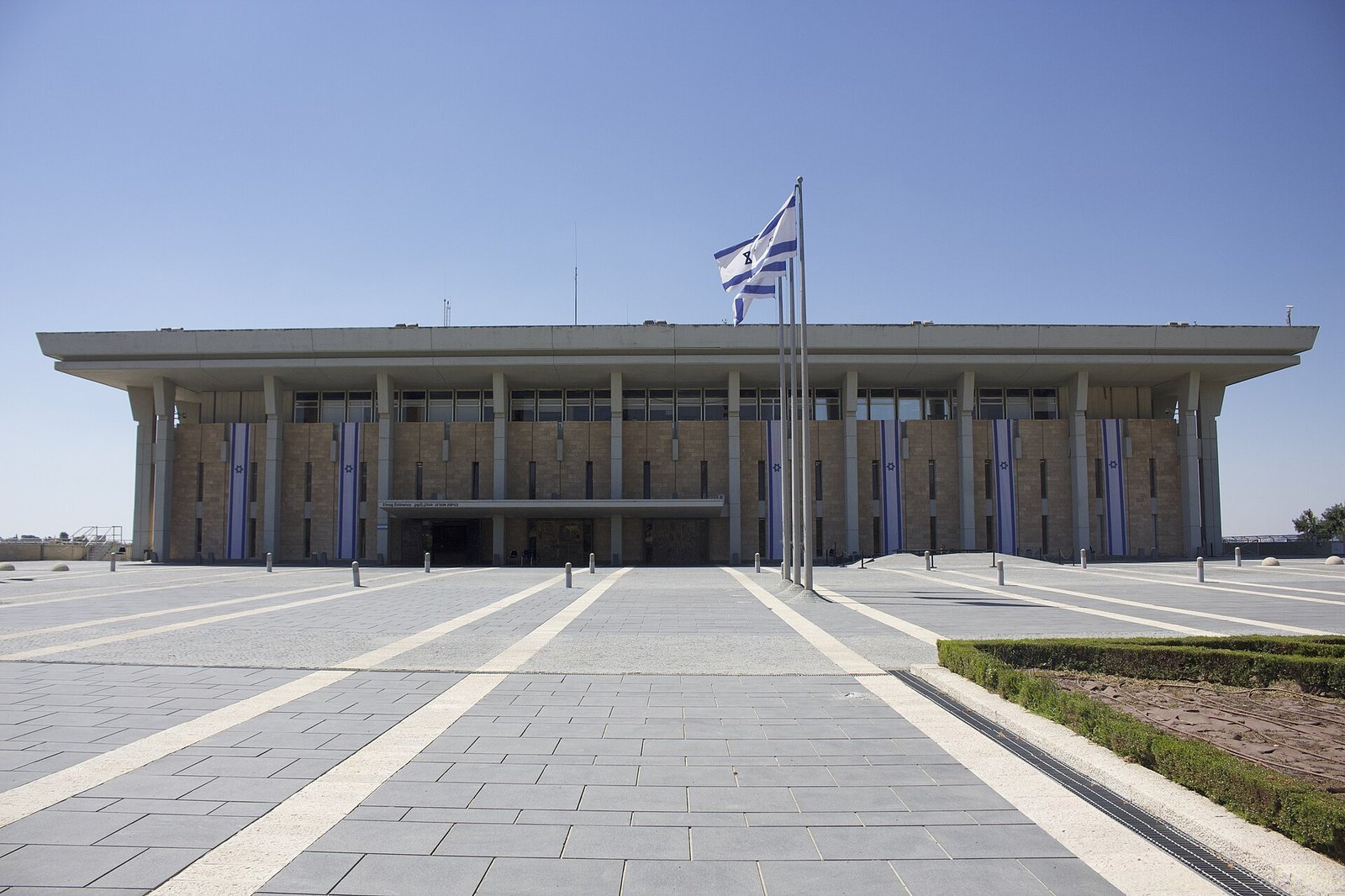
<em>The Knesset in Jerusalem. Exit polls put the Netanyahu bloc at 50 seats and “/><figcaption><em>The Knesset in Jerusalem. Exit polls put the Netanyahu bloc at 50 seats and the change bloc at 52, with 61 needed to govern. Photo: Clema12, CC BY-SA 4.0, via Wikimedia Commons</em></figcaption></figure>
<h3>The arithmetic the published tables do not close</h3>
<p>The Jewish Telegraphic Agency published Kan’s full eleven-party breakdown: Likud 25, Yashar 21, B’Yachad 14, the Democrats 10, the Joint List 10, Yisrael Beytenu 8, Ra’am 7, Otzma Yehudit 6, United Torah Judaism 6, Shas 6 and the Religious Zionist Party 6. Add those numbers and you get 119 — one short of the Knesset.</p>
<p>The same article’s prose gives the Netanyahu bloc 50 seats, the change bloc 53 and the Arab parties 17, which adds to exactly 120. Both cannot be right. Group the table by camp instead: Netanyahu’s 25 plus four allied parties at six seats each comes to 49, not 50; the change bloc’s 21 + 14 + 10 + 8 comes to 53, matching the copy; the Joint List and Ra’am come to 17, also matching. So one seat in the published party rows is either mis-keyed or double-counted in the bloc line. In a house where the majority threshold is 61, that single seat is the whole election-night narrative.</p>
<h3>Where the broadcasters contradict each other, hour by hour</h3>
<ul>
<li><strong>22:00, polls close.</strong> Kan 11 projects 50 seats for the Netanyahu bloc and 53 for the change bloc, with 17 for the Arab parties. Channel 12 projects 50 and 52, with 18 Arab seats. Channel 13 projects 50 and 53. Channel 14, which is openly aligned with Netanyahu, projects 60 against 43 and gives Likud 30.</li>
<li><strong>Within the hour.</strong> Kan revises. B’Yachad falls from 14 to 13, the Joint List rises from 10 to 11. The blocs become 50 and 52, and the Arab parties reach 18 — the record that every headline then repeats.</li>
<li><strong>The same window, different wire copy.</strong> DW, JTA and NBC’s live blog carry Kan at 53. The Times of Israel, CNN and the Washington Post carry the revised 52 with 18 Arab seats. All four are quoting “the Kan poll”, roughly sixty minutes apart.</li>
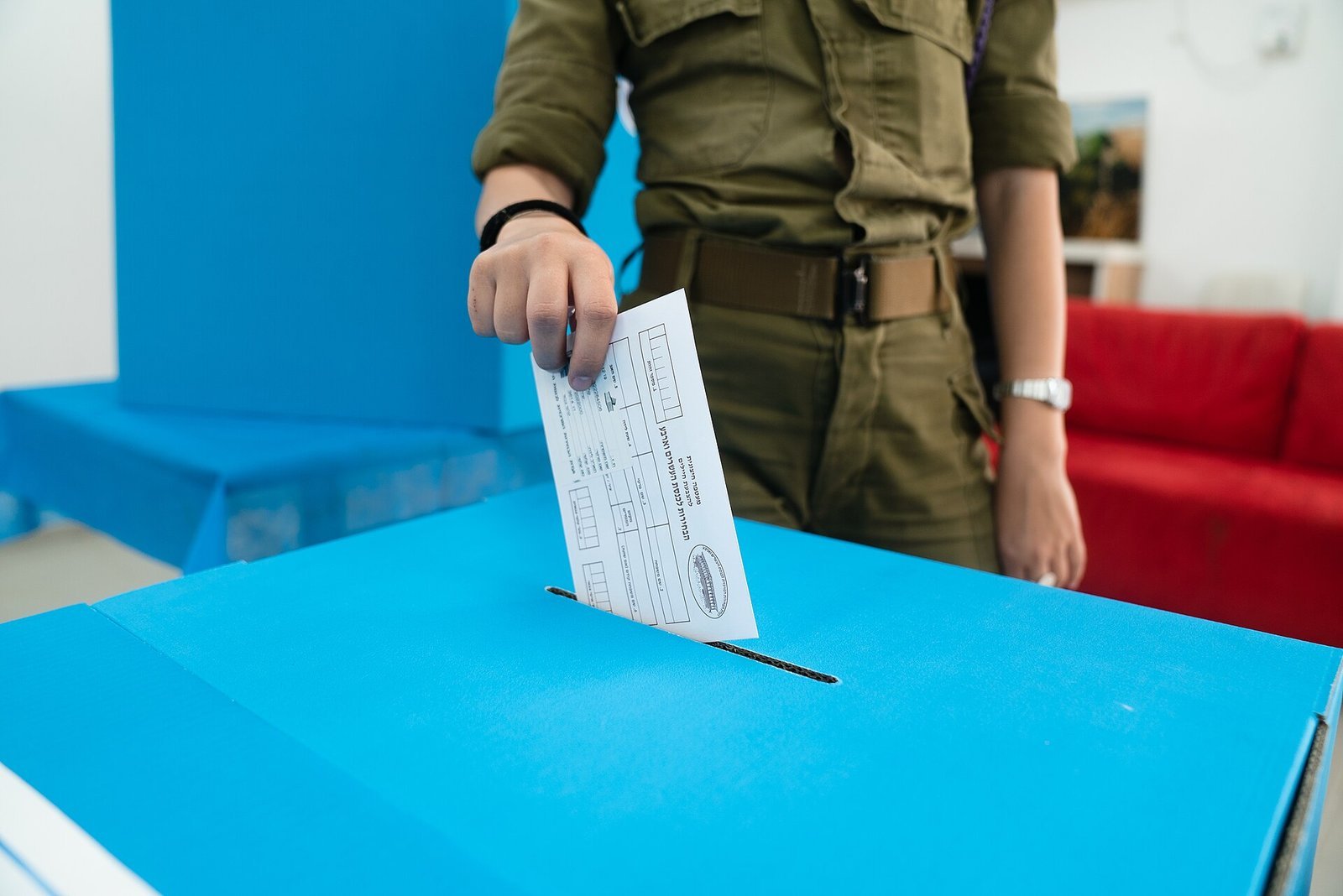
<li><strong>November 4.</strong> Certification. Soldiers, diplomats and voters who cast ballots away from their home stations are counted last, and a single seat can still cross a threshold.</li>
</ul>
<figure class=<em>An IDF soldier votes in the 2021 Israeli legislative election. Soldiers’ and”/><figcaption><em>An IDF soldier votes in the 2021 Israeli legislative election. Soldiers’ and out-of-station ballots are counted last, and can still move a seat. Photo: IDF Spokesperson’s Unit, CC BY-SA 3.0, via Wikimedia Commons</em></figcaption></figure>
<h3>The 18 seats nobody can spend</h3>
<p>The decisive number is not 52 or 53. It is 61. On the revised figures Netanyahu’s bloc is 11 short and the change bloc is nine short. The Arab parties’ 18 seats would close either gap instantly — 52 plus 18 is 70 — but the Jewish partners in Eisenkot’s bloc have ruled out a government that depends on Arab support, and Ra’am’s own MKs say it is too early to talk about red lines. So the largest Arab representation in Israeli history, 18 seats or 15% of the house against a previous high of 15 in 2015, buys nothing in coalition arithmetic this week.</p>
<p>What remains are the combinations nobody campaigned on. From Channel 12’s numbers, a Netanyahu-Eisenkot unity government starts at 46 seats and reaches 69 by adding B’Yachad at 13 and the Democrats at 10 — eight above the line. A Netanyahu-led coalition that keeps his current partners but swaps in Yashar is arithmetic too: 50 minus Likud’s 24 leaves 26, plus 24 plus 22 is 72. Both routes require the two men who spent the campaign calling each other unfit to serve in the same cabinet.</p>
<h3>What the exit polls cannot tell you</h3>
<p>Exit polls are, in the broadcasters’ own framing, an indication rather than a result, and the official count is the one that assigns mandates. What the polls can tell you is where the movement came from: turnout up eight points, Arab parties up three seats on their 2015 high, Shas down from 11 seats in 2022 to six or eight by projection, and Likud still the largest single party at 24 to 25 seats even as its bloc loses 18. That combination — a party that wins and a bloc that loses — is why President Isaac Herzog’s post-certification consultations matter more than the raw count.</p>
<h3>What to watch</h3>
<ul>
<li>The official count and the late-arriving special ballots, which can move one seat across the 3.25% threshold and change both blocs.</li>
<li>Whether Bennett, Lapid and Liberman hold their refusal to sit in a government backed by the Joint List — the single red line that keeps 70 seats unusable.</li>
<li>Herzog’s consultations after November 4, which decide who receives the first mandate to form a government.</li>
<li>Itamar Ben Gvir’s public warning against a unity government with Eisenkot, and whether it becomes a threat to bring any such coalition down from outside.</li>
<li>Turnout in Arab towns: 18 seats is the largest structural change of the night, and the least priced in by either camp.</li>
</ul>
<p><em>Sources: <a href=JTA, The Times of Israel live blog, CNN, DW, NBC News, The Washington Post. Numbers in the seat tables are the broadcasters’ exit polls, not official results.

Leave a Reply

Your email address will not be published. Required fields are marked *