
 By asahifile
 Researchers at MIT and the Whitehead Institute have built an artificial intelligence model that can reconstruct which chemical signals an individual cell received as an embryo develops — effectively reading the hidden conversations that tell cells whether to become heart, gut, muscle or spinal cord tissue. The model, called IRIS, was described in an open-access paper in Nature Methods published on September 8, and MIT News spotlighted the work this week.
The team, led by Pulin Li, an assistant professor of biology and Whitehead Institute member, and graduate student Nicholas Hutchins, trained IRIS on thousands of human embryonic stem cells and then showed it could trace signaling histories in mouse embryos — including cell types it had never seen during training.
Why cell conversations are hard to eavesdrop on
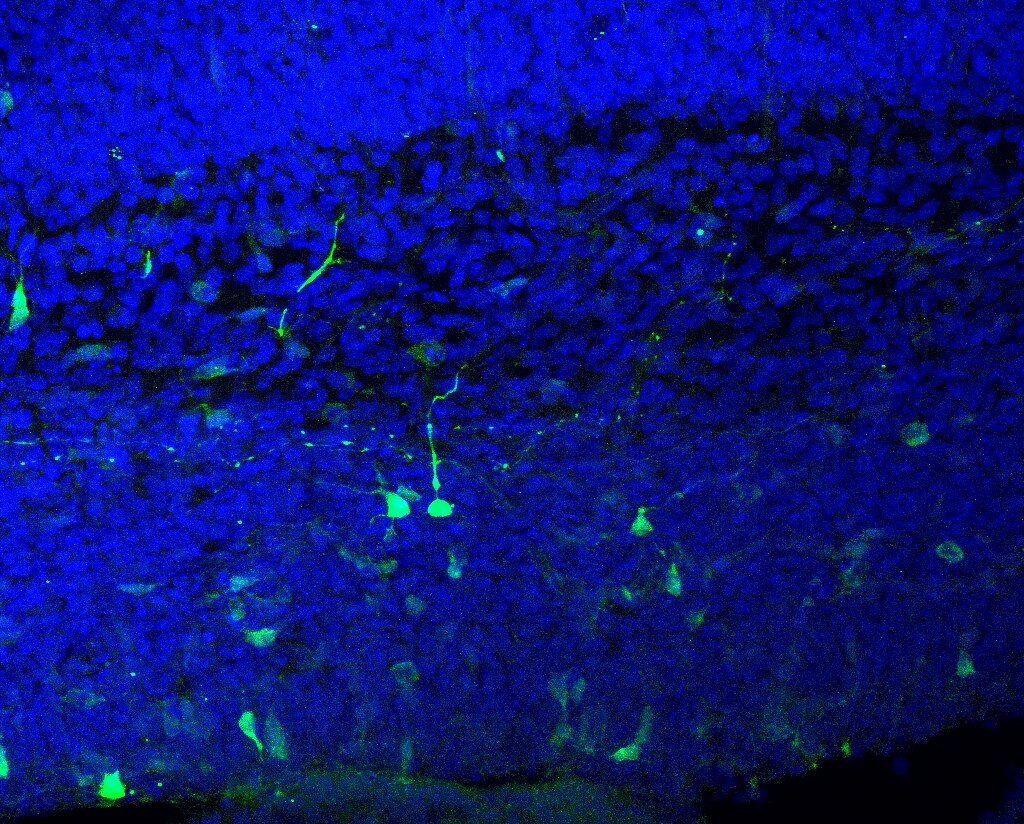
Cells talk through signaling pathways: chains of molecules that carry instructions from outside the cell to its nucleus, switching specific genes on or off. The same pathway, however, can trigger very different responses in different cell types, which has long made it difficult to work backwards from a cell’s gene activity to the signals it actually received.
Traditionally, answering that question meant experimentally testing every pathway in every cell type — a slow, brute-force process that scales poorly to the hundreds of distinct cell types in a developing embryo.
A fingerprint for every signal
The breakthrough behind IRIS is the discovery that each signaling pathway leaves behind a unique “fingerprint” — a distinctive pattern of gene activity that reflects the signals a cell has encountered. Crucially, that fingerprint is consistent across different cell types for the same pathway.
That consistency is what makes the problem learnable. Instead of mapping each cell type separately, the model can recognize a pathway’s signature wherever it appears and transfer that knowledge to cells it has not been explicitly trained on — a classic transfer-learning setup, transplanted into developmental biology. The team built a comprehensive atlas by exposing thousands of human embryonic stem cells to dozens of combinations of six major signaling pathways at multiple stages of development, then trained the neural network on that dataset.
Tested against a real embryo — and it held up
To validate the approach, the researchers ran IRIS on single cells taken from mouse embryos during gastrulation, the frantic stage when cells branch into different fates. The model accurately predicted when and where specific signaling pathways would activate in cells destined to become heart, gut, muscle and spinal cord tissue.
It also made a forward prediction: when asked which signals would drive the creation of a cell type critical for lung development, IRIS pointed to a specific pathway — and experiments in mouse embryos confirmed the model was right. “IRIS is helping us decode the language cells use to talk to each other at a much faster rate than we could realistically achieve through experiments,” Hutchins said.
Why it matters beyond developmental biology
The immediate payoff is practical rather than theoretical. Stem cell engineers trying to grow specific, functional cell types in the lab currently rely on trial and error to find the right cocktail of signals. A model that predicts the required combinations — and had one lung-cell recipe confirmed in vivo — turns that search into something closer to design.
It also strengthens the case for organoids, the miniature 3-D tissue models used to study disease and test drugs without experimenting on patients. More faithful recipes for guiding cells into particular fates should mean organoids that better mimic real organs, which in turn improves disease models and drug screening. The same toolkit could eventually inform cancer treatment, where misread or hijacked signaling is often the core defect.
There is a broader point about AI in science here too. IRIS did not discover new biology out of thin air; it compressed an enormous experimental search space into a reusable map, then pointed researchers to the few experiments still worth running. That pattern — AI as an experiment accelerator rather than an experiment replacement — is becoming the most credible version of machine learning’s promise in the life sciences.
What to watch
- Whether the team and other labs extend IRIS beyond the six major pathways it was trained on, and into human organoid systems.
- How quickly the fingerprint approach is picked up for regenerative medicine pipelines, where signal recipes directly determine which cell types labs can manufacture.
- Whether similar transfer-learning fingerprints show up in disease contexts such as tumor signaling, where reconstructing a cell’s history could clarify how a cancer progressed.
Sources: MIT News, Whitehead Institute, Mirage News (paper: “Reconstructing signaling histories of single cells via perturbation screens and transfer learning,” Nature Methods, Sept. 8, 2026)