
 By asahifile

On 29 October Mistral published the weights of Mistral Large 4, the model it calls Le Chonk: roughly 1 trillion total parameters, about 52 billion active per token, 128 routed experts with four active at a time plus one shared, a 1 million token context, image input and three reasoning settings. Mistral says it trained the model from scratch on 3,800 Grace Blackwell GPUs in its own European datacentres, under a modified-MIT licence that requires a commercial agreement from anyone selling it as a service. The API prices are $0.70 per million input tokens, $0.07 cached input and $2.10 output.
The harder question is what open weights mean for a model whose footprint starts at half a terabyte.
The weights are a terabyte before anything else runs
At 16-bit precision a trillion parameters is 2,000 GB of weights; in FP8 it is 1,000 GB; the separate NVFP4 checkpoint Mistral points Blackwell users to is about 500 GB. The number that explains the architecture is 19.2: each token activates 52 billion parameters, but all 1 trillion stay resident. Mixture-of-experts saves compute per token and charges memory per deployment.
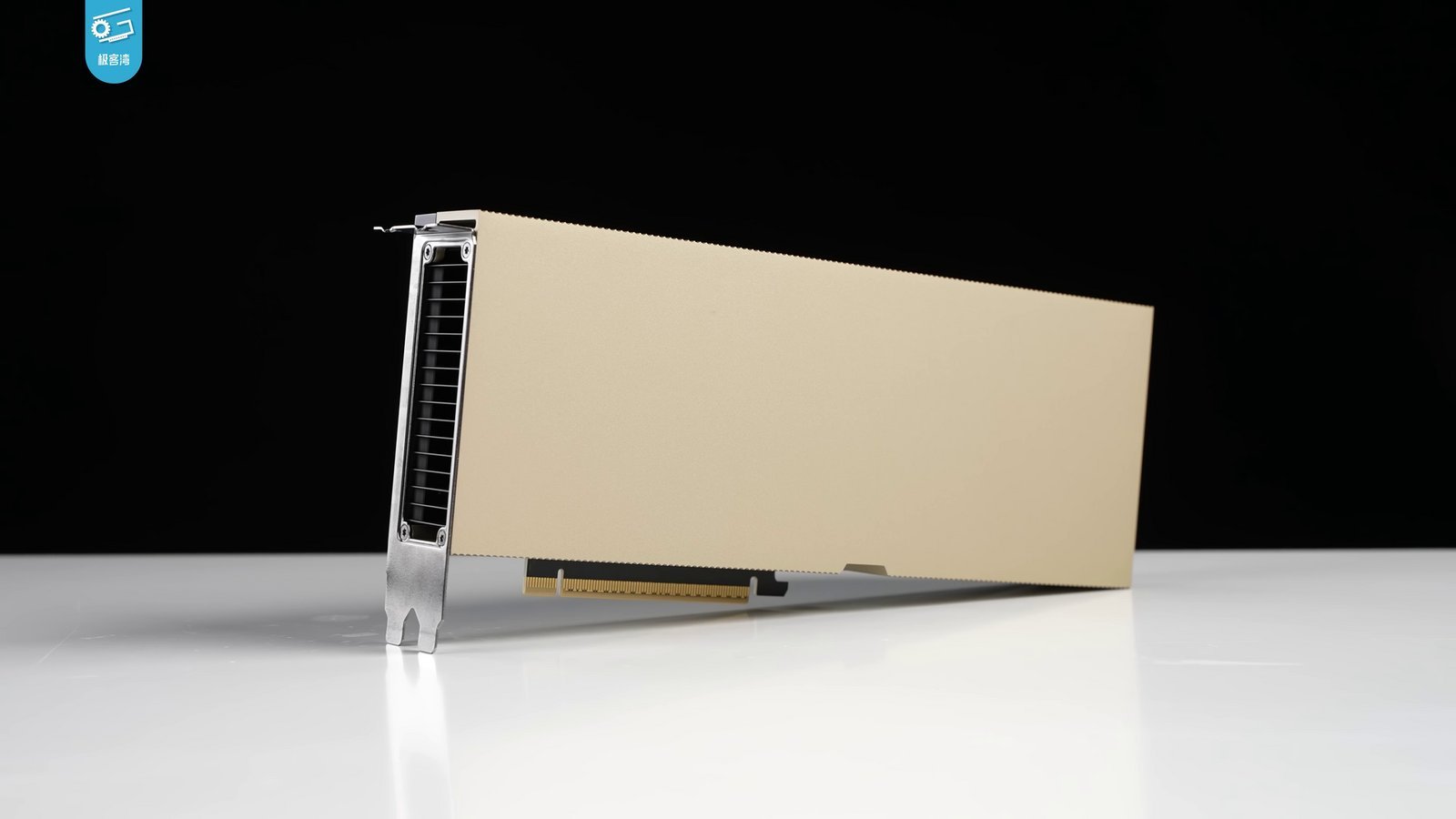
Against real hardware that is tight. Eight 141 GB H200s hold 1,128 GB, or 959 GB usable at the 0.85 utilisation Mistral’s own vLLM recipe sets. The FP8 weights alone need 1,000 GB — 8.35 GPUs’ worth — before one block of KV cache exists, and KV cache is exactly what a 1M-token context consumes. The NVFP4 path is how the arithmetic closes on one machine: eight 192 GB Blackwell GPUs give 1,306 GB usable, leaving roughly 806 GB for cache, batching and the speculative-decoding draft head that ships inside the checkpoint. On Hopper you need more than one node, which changes the cost case completely.
Break-even is a token volume, not a price
The efficiency claims — 48 percent on Artificial Analysis’ Coding Agent Index, level with GLM-5.3 on 47 percent fewer tokens per task, Terminal-Bench 4.0 at 41 percent — are tokens per task, the right unit for an agent, not a hosting bill.
The bill, with one assumption stated plainly: an eight-GPU Blackwell node at $25 to $60 an hour. At 730 hours a month that is $18,250 to $43,800, which at $2.10 per million output tokens buys 8.7 billion to 20.9 billion output tokens a month — the volume at which ownership matches paying per token. Idle time is the trap: a rented node bills whether or not a request arrives, so 20 percent utilisation means pushing the same volume through a fifth of the calendar.
Caching pushes the threshold higher. Cached input at $0.07 is 10 percent of the $0.70 input price, so retrieval pipelines, long system prompts and agent loops that resend a repository are precisely where the API is hardest to beat.
In yen, and in Tokyo
At the European Central Bank reference rate for 29 October of ¥158.06 to the dollar, those prices are ¥110.6 per million input tokens, ¥331.9 output and ¥11.1 cached. For a Japanese team the case for the weights is not price but residency: a 1M-context model that reads contracts, drawings or clinical records often cannot leave the country, and this licence permits on-premises deployment without a Mistral contract, provided you are not reselling inference.
The caveat is evaluation. FrontierCode 2.0 at 19.7 percent, BrowseComp at 84.5 percent, Finch at 73.3 percent and the Cyber Index at 51 percent are English-language work; native fluency in more than 160 languages is a model-card claim rather than a score, so a local deployment still needs its own Japanese evaluation.
When the answer flips
Self-host when you can sustain roughly 10 billion output tokens a month at real utilisation, when you already run Blackwell capacity, when residency or an air gap is a procurement requirement, or when you intend to fine-tune on proprietary data. Do not self-host when your volume sits below break-even, when the workload is cache-friendly, when you plan to sell inference because the licence requires a Mistral agreement first, or when you need the top aggregate score: Mistral’s own chart puts the model at 26 on the Artificial Analysis Intelligence Index v5, first among Western open-weight models but behind the leading Chinese ones.
What to watch
- Independent throughput on eight Blackwell GPUs with NVFP4.
- Whether the model-as-a-service clause gets tested by a hosting provider.
- Fine-tune quality on non-English data, the first real test of the language claim.
- Whether the 1M context survives production batch sizes; KV cache is the binding constraint.
- How the vetted cybersecurity variant offered to Orange Cyberdefense is distributed.
- Whether European sovereign buyers standardise on these weights — Zscaler and La Banque Postale are named references.
Sources: Mistral AI, “Mistral Large 4 (Le Chonk) is now open weight” (29 October 2026), the model card on Hugging Face and Mistral’s documentation. USD/JPY reference rate from the European Central Bank via Frankfurter, 29 October 2026. Weight footprints, GPU counts, break-even volumes and yen prices were computed for this article; the GPU rental range is an explicit assumption, not a published quote.