
 By asahifile

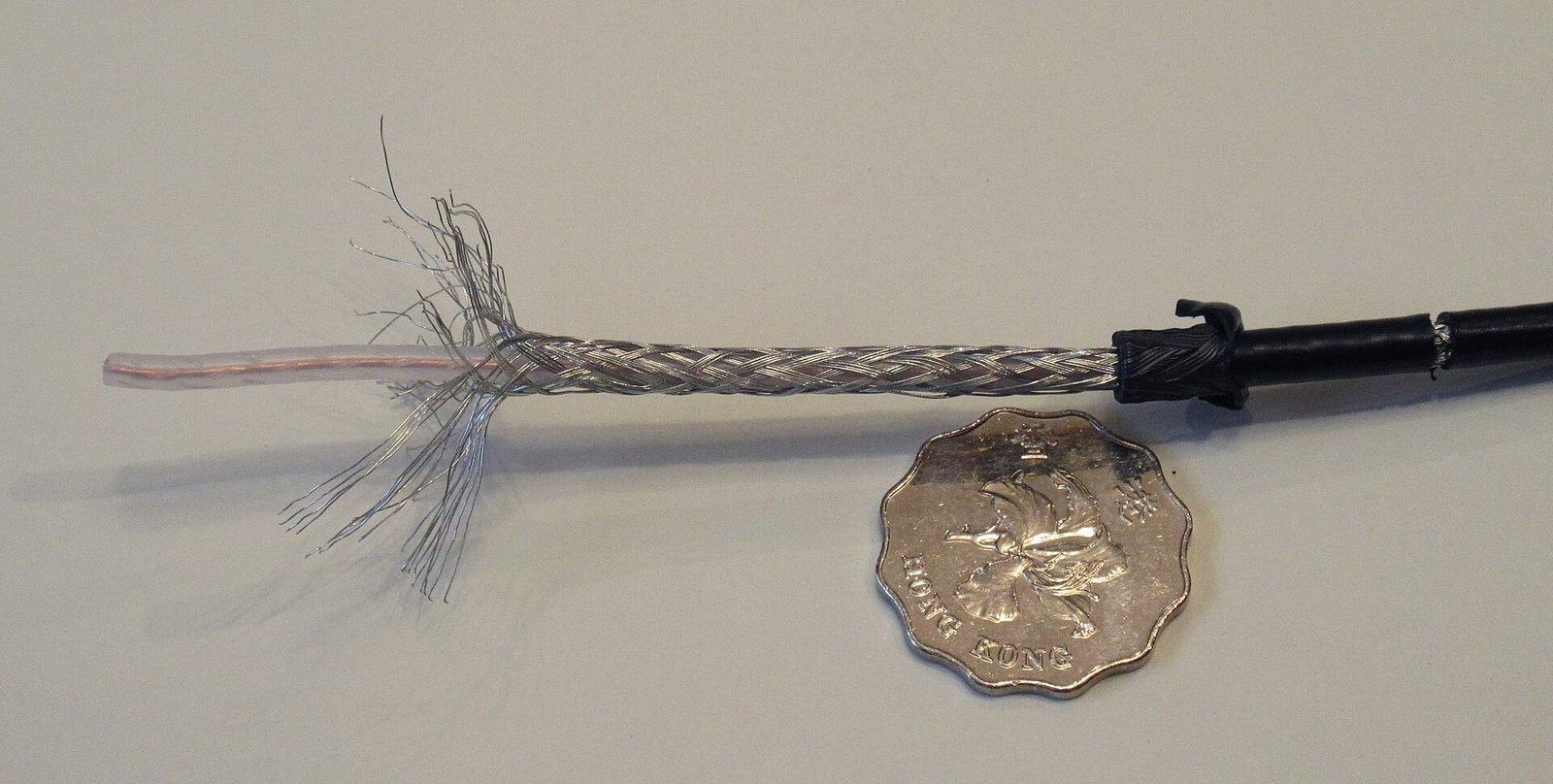
On Friday, 13 November, AT&T sued Comcast in the Northern District of California over two words. The complaint — case 3:26-cv-13704-AGT — calls selling Xfinity Internet as “fiber-powered” “literally false,” because most of Comcast’s network is hybrid fiber-coaxial: fiber to a neighbourhood node, copper coax for the last mile. AT&T wants the phrase barred, and the profits Comcast earned while using it.
The claim, and the concession inside it
In March, AT&T took the same complaint to the National Advertising Division, the industry’s self-regulator. On 3 June the NAD sided with Comcast: the claim was supported because the disclosure “Xfinity Internet is powered by fiber and connected to premises by coaxial cable” describes the architecture accurately. Placement was the failure — the disclosure sat “several panels away,” carried no asterisk, and vanished inside pricing fine print; Comcast said it would comply. The regulator never asked whether the word was true, only whether the footnote was visible.
The complaint’s sharpest exhibit is Comcast’s own copy: fiber “tend[s] to offer more consistent performance than . . . copper-based alternatives, especially during peak usage hours” — on the page selling Xfinity as “the most reliable, fiber-powered WiFi.” Comcast advertises the copper it is wired with as the thing it beats.
The measured signature of fiber
Fiber has a signature cable cannot fake: upload equals download. WhistleOut’s third-party figures put typical upload on Xfinity’s 300 Mbps, 500 Mbps and 1 Gig tiers at about 23 Mbps — 13-to-1 on the entry plan, 43.5-to-1 on 1 Gig. The bigger the download headline, the wider the gap, and the tier the complaint quotes as “most reliable, fiber-powered WiFi” is 3.3 times more asymmetric than the cheapest one.
Per upstream megabit, $45 for 23 Mbps up is $1.96, against about $0.17 for a symmetrical 300 Mbps fiber plan at $50. A 200 GB camera backup takes 19.8 hours at 23 Mbps, 1.5 hours at 300.
Comcast’s official upload number sits on the FCC-mandated Broadband Facts label, served only after an address lookup — I hit that form today. The one figure that tests the claim is not in the advertisement.
What it would cost to make the claim true
Comcast’s chief financial officer, Jason Armstrong, called rivals’ $30-to-$40 offers “irrational” on the Q3 call, because deploying fiber costs “$1,500 or more” per home. Apply that to Comcast’s 28.3 million residential broadband customers and retrofitting them costs $42.45 billion — a floor, since the network passes more homes than it sells to. The “over $1 billion” restructuring charge due in the fourth quarter is 2.4 percent of it.
His arithmetic also explains why the adjective wins. At $40 a month, $1,500 of fiber needs 37.5 months of gross revenue to repay, before poles, power and interest. Relabelling coax costs nothing.
The churn is that bill arriving anyway: 144,000 residential broadband customers left in the third quarter, up from 91,000 a year earlier. At $1,500 a line, that is $216 million of fiber somebody else built in three months.
Three venues, three verdicts
The same phrase has been judged three ways. In March, Charter revised its disclosures after an AT&T complaint to the NAD. In August AT&T sued Charter in Texas; Charter moved to dismiss in October, arguing that “fiber-powered” fits the word “powered,” as computers are “powered by Intel chips.” In June the NAD called Comcast’s claim supported but its disclosure too quiet. One hundred sixty-three days later, a federal complaint calls the identical words literally false. The self-regulator asked whether buyers could find the caveat; the court will be asked whether the caveat is the confession.
When the word is fine
There is a version where Comcast is right: where it has upgraded to DOCSIS 4.0 and sells X-Class tiers, upload and download are equal — 300/300 up to 2,000/2,000 — and the word describes something measurable. The verdict flips on your address, not the slogan.
Where it does not, read the upload figure: that is the spec you cannot upgrade around. Do not buy on this label if your traffic runs upstream — several simultaneous video calls, RAW or 4K backups, a NAS or home server, remote desktop. In Japan the word barely exists: retail fiber is sold as hikari, and the ONU on the wall is the proof.
What to watch
- Whether Comcast answers with Charter’s “powered by” semantics or the NAD’s disclosure-proximity defence. The two are incompatible.
- Whether the court stops at “false by necessary implication,” the easier standard and the one that would generalise to every cable ad.
- How much of those 28.3 million lines is symmetric — Comcast has never published the share — and what the fourth quarter shows.
Sources: Ars Technica; AT&T complaint, N.D. Cal. 3:26-cv-13704-AGT; NAD decision, 3 June 2026; Comcast Q3 2026 earnings; WhistleOut upload data; AT&T Fiber prices. Ratios, per-megabit prices, backup times and the retrofit bill are this site’s own arithmetic on those inputs.