
 By asahifile
North Korea’s leader crossed into China on Saturday over a bridge that had been finished, and empty, for twelve years. Kim Jong Un visited the Chinese border city of Dandong on 24 October, arriving via the New Yalu River Bridge, a three-kilometre crossing that officially opened to traffic only days earlier. Because neither government announced the trip in advance and the public readout was thin, the differences between the wire services’ accounts are as informative as what they agree on.
Where the wires agree
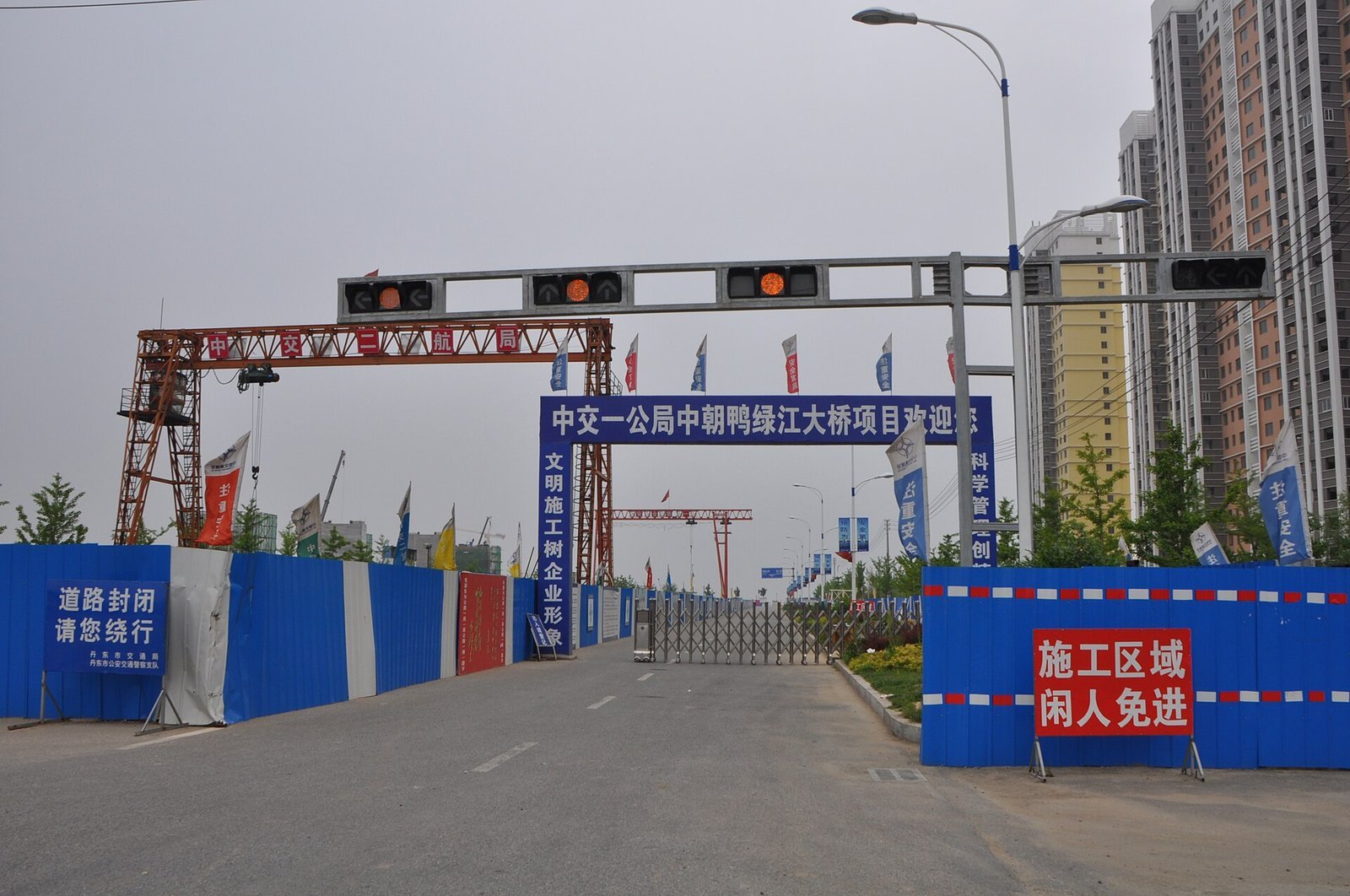
Kim arrived in Dandong over the new bridge and was accompanied there by Wang Huning, China’s fourth-highest-ranked official and its top political adviser, who conveyed Xi Jinping’s “cordial greetings and best wishes”. The visit included a Korean War memorial ceremony and a tour of an automobile factory. Both sides promised closer cooperation, and Xinhua quoted Wang calling for expanded personnel exchanges, economic cooperation and strategic coordination. China remains North Korea’s largest trading partner and accounts for most of its official trade. The bridge is expected to carry heavy equipment, raw materials and energy products, and the opening is the latest step in a warming sequence that includes two leaders’ summits in thirteen months and Xi’s state visit to Pyongyang in June.
Where they split
- What the visit actually was. The Associated Press describes Kim as “inaugurating a new bridge”. Reuters, AFP and CNN describe a cross-border visit over a bridge that had already opened: Reuters and CNN put the opening to traffic on Thursday, AFP says it opened “last week”, and AP says simply “this month”. Same crossing, four dates.
- Whom he met. Xinhua’s readout names only Wang Huning, and AFP notes pointedly that it made no mention of talks with Xi or with Premier Li Qiang. Reuters, citing a second unnamed South Korean official, reported that Li Qiang met Kim in the border city; AFP attributes the claim to South Korean lawmaker Youn Kun-young, who said Kim was “understood” to have met Li.
- Who told us. AFP reports that neither Pyongyang nor Beijing disclosed the visit in advance, and AP that North Korean state media did not immediately report it at all. Every substantive claim about the talks therefore rests on anonymous South Korean officials or a lawmaker’s briefing, not on either government.
- Why now. AP ties the timing to the 25 October anniversary of what it calls China’s first major victory in the Korean War, days after Chinese troops crossed the Yalu in October 1950. AFP says the trip fell near the date both countries use to mark that entry.
The bridge, in numbers nobody disputes
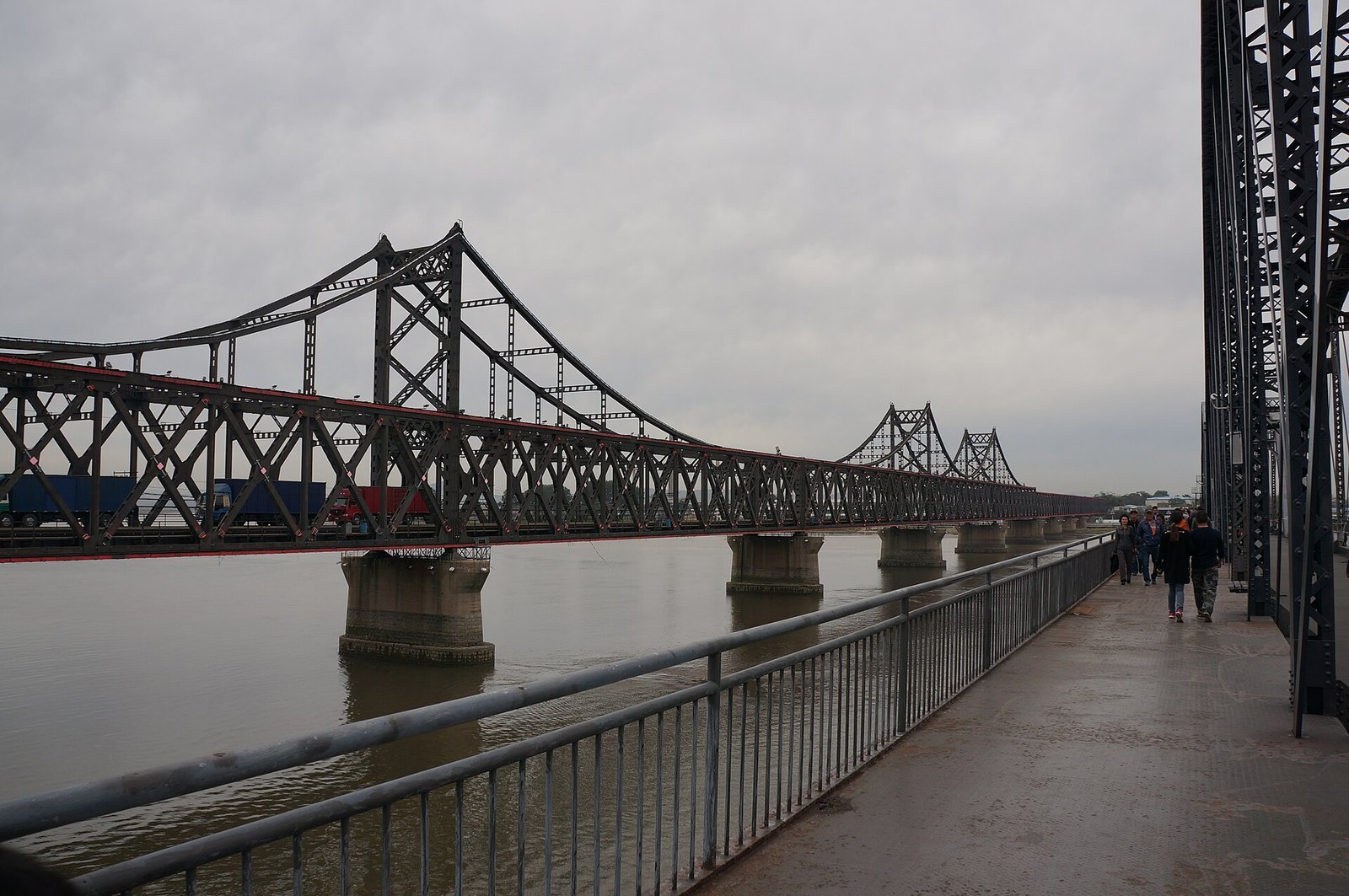
The crossing itself is the one part of the story with hard edges. AFP reports the bridge opened twelve years after it was completed; from an October 2014 completion to an October 2026 opening is 4,383 days, or almost 105,200 hours, during which the most significant land link between the two countries sat finished and unused. It is three kilometres long and is expected to handle two-way traffic around the clock, including container shipments and heavy cargo trucks. As Christopher Green of Leiden University told Reuters, the bridge “was for more than a decade a symbol of how dysfunctional bilateral relations could become” — which is why Kim’s decision to walk across it, rather than any trade figure, is being read as the signal.
What the contradictions are telling you
Two things, and neither is that reporters got it wrong. First, the substance of the trip is genuinely thin: a bridge crossing, a memorial, a factory tour and a promise to cooperate, with the question of whether the two premiers actually sat down left to anonymous sourcing. Second, there is a live strategic argument underneath. North Korea has drawn closer to Russia since Moscow’s invasion of Ukraine, sending thousands of troops and weapons, and analysts quoted by Reuters and AFP question whether that reduces Pyongyang’s reliance on Beijing. China’s government-linked expert Lu Chao tells Reuters the bridge has resolved “a major bottleneck in China–North Korea trade logistics”; Yang Moo-jin, a former president of the University of North Korean Studies, suggests Kim may have crossed to press China to move faster on commitments from Xi’s visit. Leif-Eric Easley of Ewha University in Seoul frames the other side of it: if Kim can extract ever more from China and Russia, it is unclear what Seoul could offer that would be worth the political risk.
What to watch
- Whether KCNA publishes its own account of the visit, and whether that account mentions Li Qiang. A North Korean readout would end the anonymous-sourcing problem in one move.
- Whether Chinese customs data shows a jump in Dandong trade in the fourth quarter. The readout was silent on volume, and tonnage is the number that will eventually settle what the visit was for.
- Whether a Beijing meeting with Xi is announced. Reuters reported, citing a South Korean official, that a Beijing leg was unlikely before the Communist Party’s high-level meetings starting Monday; a Xi–Kim summit instead would be the strongest signal yet that third countries are being left out of the loop.
- Whether the bridge actually runs around the clock. Round-the-clock container traffic was promised, not observed; a queued truck is a better indicator of trade warming than a ribbon-cutting.
Sources: Reuters via CNN; AFP; Associated Press; ABC News (Australia). Bridge-idle-day arithmetic calculated from AFP’s twelve-year figure by this site.