
 By asahifile
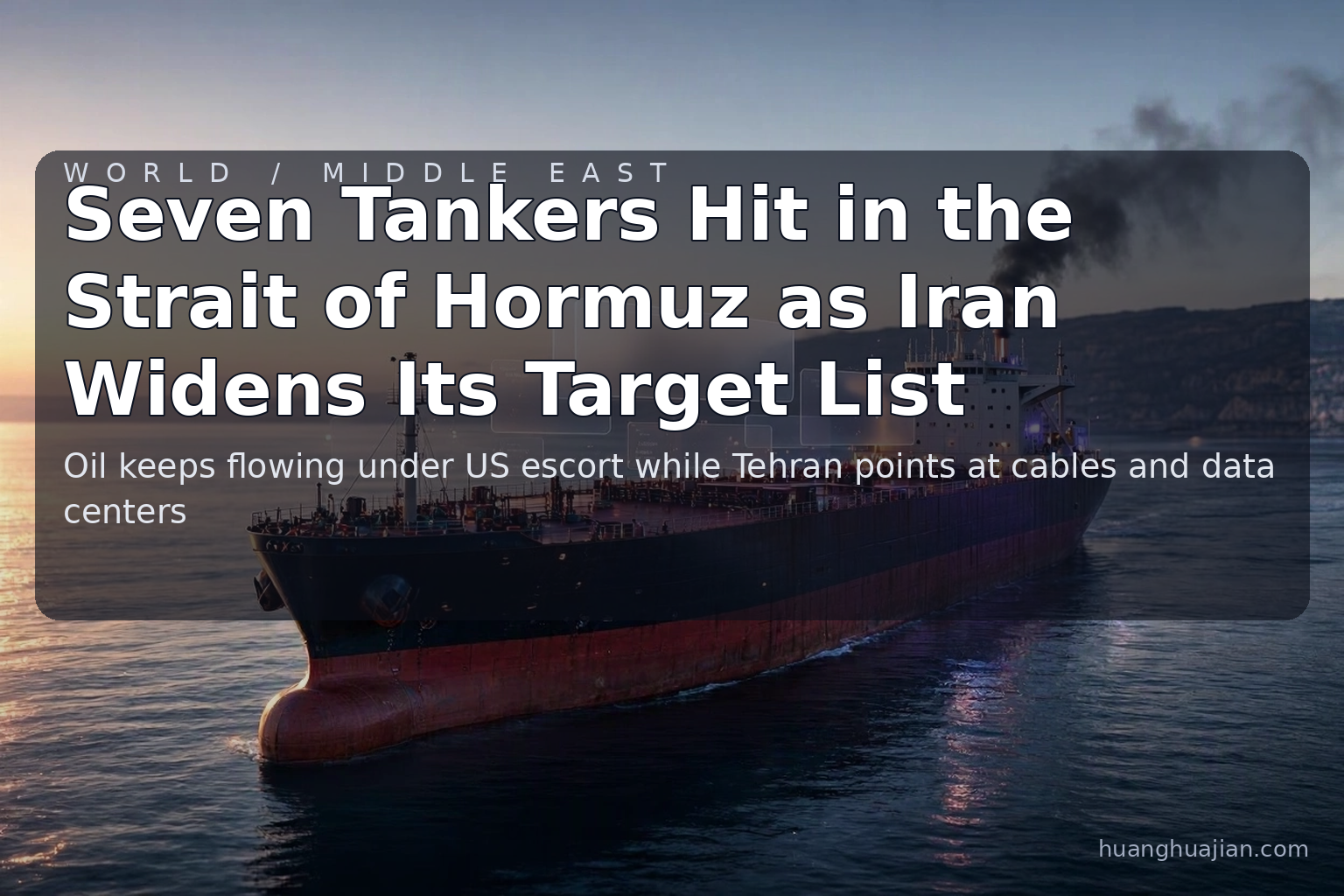
Seven oil tankers caught fire or were damaged in the Strait of Hormuz overnight after being struck by Iran or hitting naval mines, Iranian state media said on Thursday — a claim the Associated Press said it could not independently confirm. Iran’s Revolutionary Guard Corps navy used the announcement to repeat a threat: it would hit US military bases in the region if Washington keeps helping to guide commercial ships through the strait. October is already the worst month for attacks on merchant shipping since the war’s opening weeks in March, according to the UK Maritime Trade Operations (UKMTO).
The worst month since the war began
Lloyd’s List Intelligence counted 28 attacks on ships in October, the highest since the start of the war, and said “active Gulf operators show little sign of retreating”. Iran’s IRGC navy said a tanker carrying 750,000 barrels of crude struck a mine and caught fire after using what it called an unauthorised route despite warnings; the IRGC-linked Tasnim agency described it as the third tanker to hit a mine that day. UKMTO logged 12 attacks between 5 and 11 October, ten of them in the strait, and recorded that in the third quarter 87% of the 45 ships targeted were tankers. The war itself began on 28 February with US and Israeli strikes on Iran.

Oil still moves — under escort
Despite the tempo of attacks, tankers keep transiting under US military protection, according to shipping data and analysis firm Lloyd’s List. That escort is precisely what Iran says it wants to disrupt. Tehran has described an Arab-operated, US-assisted shuttle system that has kept energy exports flowing, and says it maintains seven conditions for restoring normal shipping through the strait — conditions it claims could restore normal operations within seven days. The IRGC navy also said vessels that switch off their navigation systems while transiting would be classified as “hostile vessels”, a warning aimed at ships trying to move quietly.
The target list now includes data centers
The new element this week is not the tankers but the target list. Mohsen Rezaei, secretary of Iran’s Supreme National Security Council, said on state television that if war with the United States and Israel resumes, “many cables, data centers and artificial intelligence facilities, valued at $2 trillion, will be within range”. He pointed specifically at American technology assets in the United Arab Emirates and around the Strait of Hormuz, saying they had not yet been struck but could be. Iranian hardliners have publicly backed the threat. In practice that means undersea communications cables, hyperscale data-center campuses and the AI investment programmes the Gulf has spent years courting — the region’s second economic pillar, built in part to diversify away from oil.
Analysis: a wider definition of deterrence
Iran’s oil leverage has limits, and both sides know it. Crude keeps moving, prices have not spiked into crisis territory, and US escorts keep the corridor usable. Adding digital infrastructure to the threat list is a way to raise the cost of a renewed air campaign without closing the strait — asymmetric, cheap, and aimed as much at the Gulf states hosting US technology as at Washington. Cutting a handful of fibre routes or damaging a data center can disrupt banking, cloud and government traffic across a region without sinking anything. That shifts the risk calculus for the cloud providers, cable consortia and AI funds now pouring money into Gulf campuses, and it turns physical security and backup routing from an engineering footnote into a board-level question.
What to watch
- Whether the pace of attacks on shipping continues through the end of October.
- Whether oil flows, freight rates and war-risk insurance premiums move materially.
- Whether Gulf AI and data-center projects announce new security, backup-routing or insurance arrangements.
- Whether the US changes escort tactics, and whether the IRGC acts on its cable and data-center threats.
Sources: AP via KTTC, Iran International, Al Jazeera.