
 By asahifile
A wave of drone strikes in Sudan has killed more than 300 people in two days, according to monitors and local officials, including around 150 mourners travelling to a funeral and at least 153 people at a market in the disputed Abyei area. Sudan’s army has not confirmed the attacks, but a military source told the BBC that the army carried out the Abyei strike, describing the market as a fuel supply site for the paramilitary Rapid Support Forces (RSF).
The deadliest sequence began on Sunday evening. According to the Sudan War Observatory, a monitoring group that tracks the conflict, a truck carrying around 200 mourners from north of Abyei was hit as it arrived in the town of Al-Dabab in West Kordofan state, killing 145 people; a tent where funeral mourners had gathered was then struck, killing five more. Around 150 people were injured. Army drones also bombed a market in Al-Mujlad the same evening, the group said, with casualties still uncounted.
The Abyei strike and a diplomatic rupture
The following day, drones hit Amiet Market around 11:30 local time, roughly 10 kilometres from Abyei town. The area’s information minister, Yohana Akol Ngor, told the broadcaster Radio Tamazuj that the death toll had risen from 73 to 153, later confirming the higher figure to the Associated Press and Reuters. “It is a horrible and shocking situation,” he said. Emergency workers struggled to recover bodies because of fires caused by the strikes, he told Reuters.
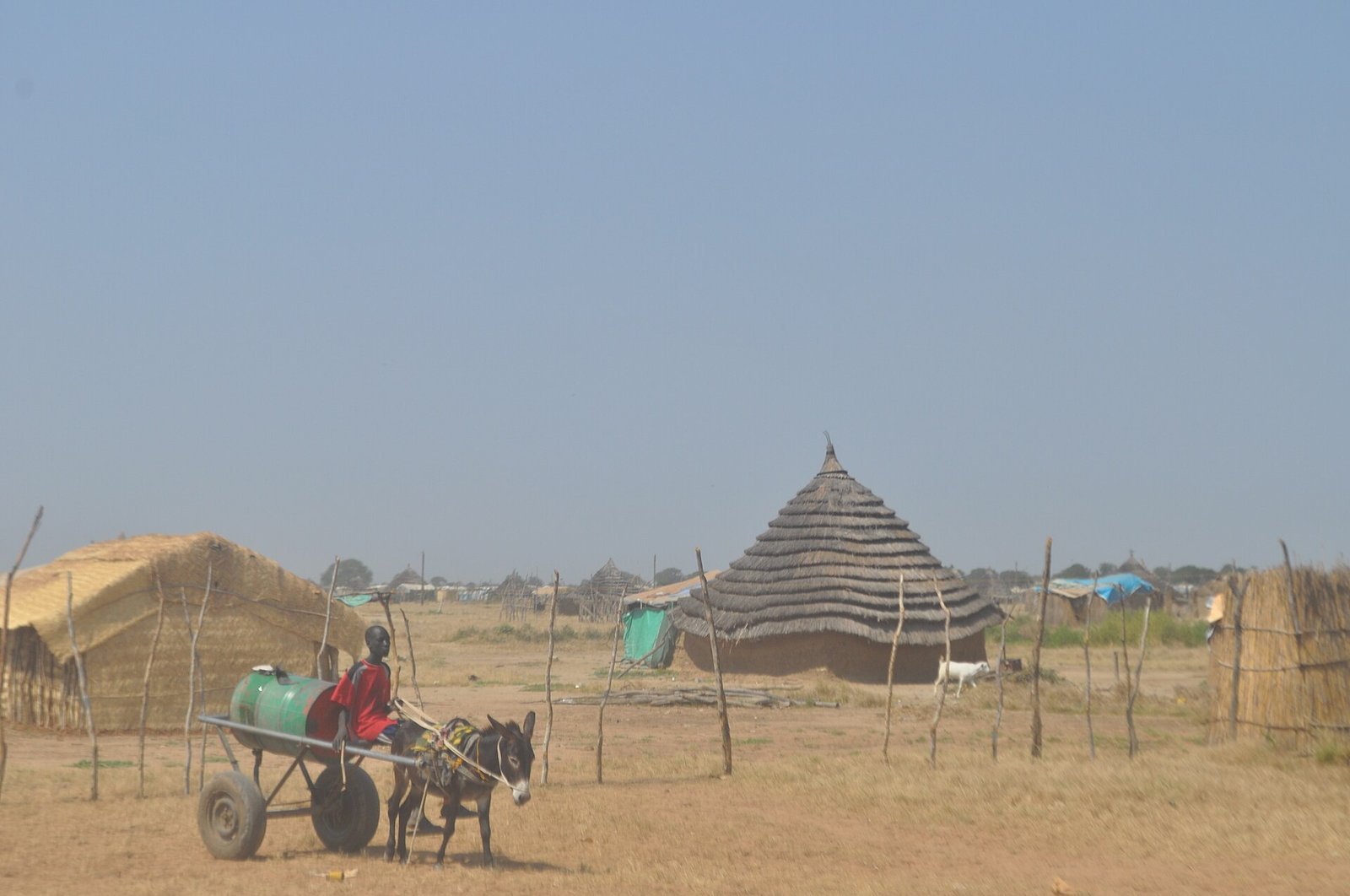
Abyei is administered jointly by Sudan and South Sudan, both of which claim the oil-rich territory, a dispute left unresolved when South Sudan seceded in 2011. South Sudan has summoned Sudan’s ambassador to lodge a formal protest, and the strikes have raised fears that the war could spill across the border. Médecins Sans Frontières said its teams at Ameth Bek Hospital in Abyei town had received more than 20 patients, including burns cases and several critical injuries.
Sudan’s army has said it does not attack civilians even when it believes RSF fighters are among them. The UN spokesperson Stéphane Dujarric said on Monday that the organisation was “alarmed by the continued deadly drone strikes across the country that are killing civilians, including children, and that are disrupting essential services”.

Drones are now the weapon of choice
The strikes fit a pattern that has accelerated over the past year. Despite a partial arms embargo on Sudan, foreign suppliers have equipped both the army and the RSF with drones, and the aircraft have become the cheapest way to strike a target at range without risking a crew. The monitoring group said the Sunday attacks were probably launched from Kadugli, an army-held city in South Kordofan.
That shift changes what civilian harm looks like. Drones allow more strikes per day at lower cost, and the targets are often marketplaces, convoys and gatherings rather than fortified positions. Attribution is also harder: when both sides fly similar systems, the question of who hit a funeral can take days to settle, and the answer usually arrives through monitors and local officials rather than a formal claim of responsibility.
The humanitarian arithmetic
The strikes come as roughly 20 million people face acute hunger, with famine risk rising in parts of Darfur and Greater Kordofan, the region where this week’s attacks occurred. Kordofan is strategically vital, linking RSF-held Darfur to the capital, Khartoum, which the army retook last year. Fighting there has intensified since.
Since the war erupted in 2023 between the army and the RSF, hundreds of thousands of people have been killed and more than 14 million displaced, making it one of the world’s worst humanitarian crises. A drone strike near Khartoum’s airport on Monday killed four people, including three children, according to AFP, which cited a medical source.
What to watch
- Whether Sudan’s army formally acknowledges or denies the West Kordofan and Abyei strikes, and whether it publishes its own casualty figures.
- The outcome of South Sudan’s protest: whether it escalates beyond a summons, and whether a joint Abyei administration mechanism convenes.
- Whether the UN Security Council moves on drone supply chains, given that the existing embargo has not stopped deliveries to either side.
- Verified casualty totals from the Sudan War Observatory and UN agencies, which have so far run behind local officials’ counts.
- Famine assessments for Greater Kordofan, where this week’s strikes hit a market and a funeral route used for food distribution.
Sources: The Star (Kenya), reporting with AP, Reuters and BBC, UN News, BBC News.